The client
Aus-Scan is an owner-operated underground service locating business. Before builders, plumbers, solar installers and pool builders dig, Aus-Scan finds the cables and pipes in the ground, marks them out in the standard colours, and reports what was found. It works across Melbourne and Geelong with electromagnetic locators and ground-penetrating radar.
Most of its work comes the same way: a site manager searches, finds the site, and rings. So the website has one real job. Be found, be trusted, get the call.
The problem
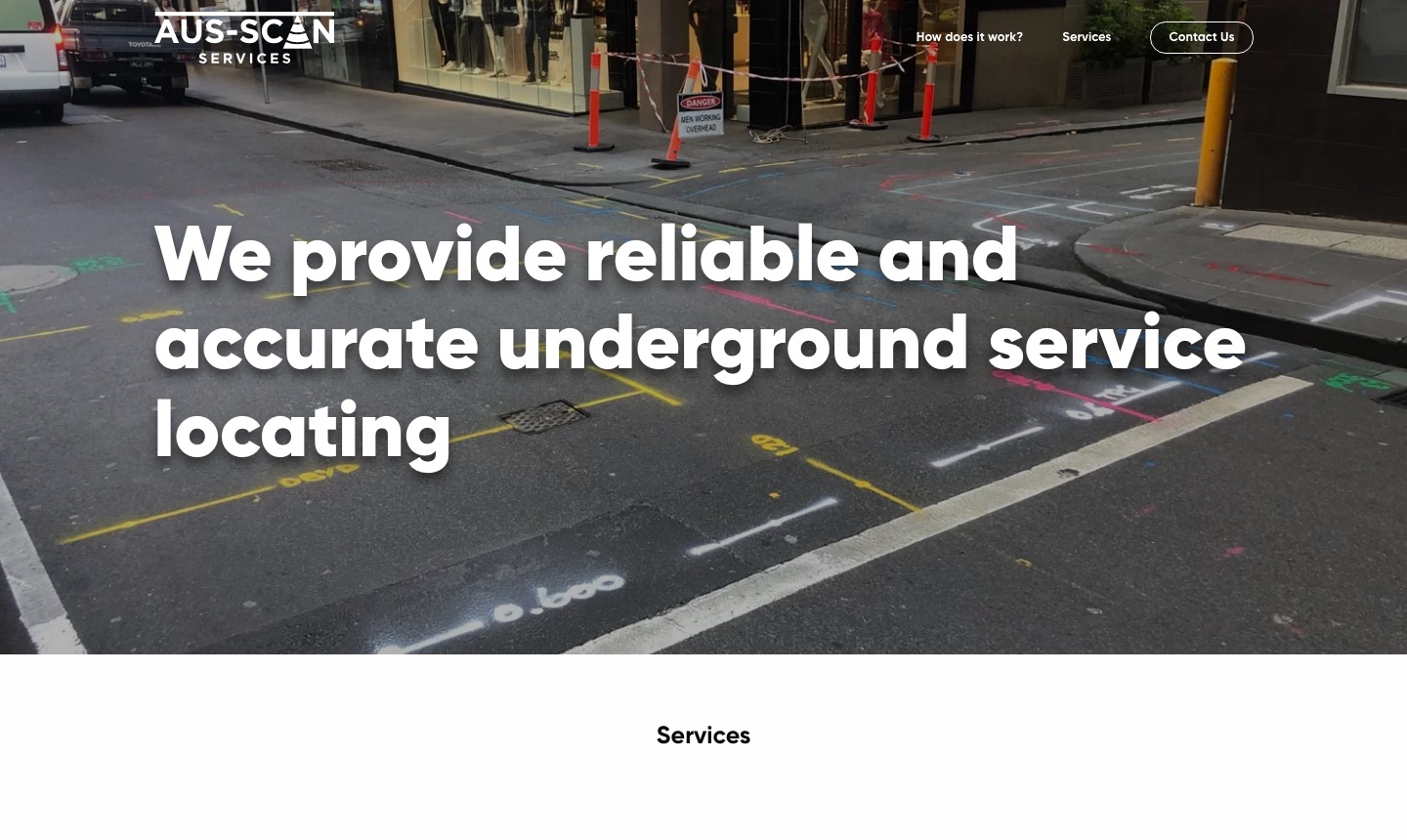
The existing site was a WordPress build from 2021. It worked for search, and the rankings were worth protecting. But it made getting in touch harder than it needed to be, and it looked smaller than the business is.
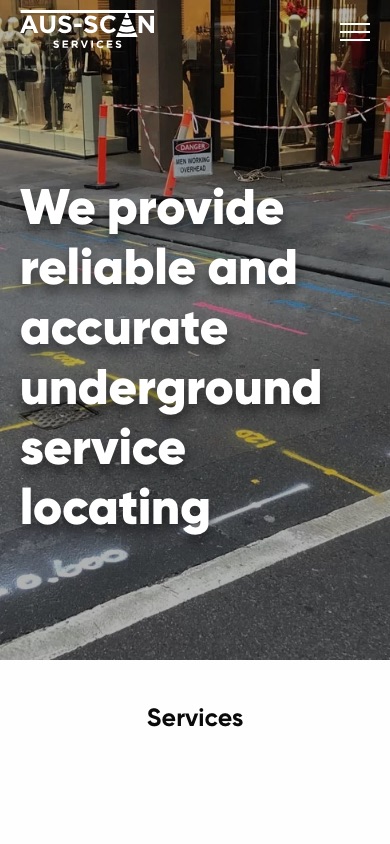
- No phone number on the first screen, on desktop or mobile. The only way forward was a “Contact Us” button.
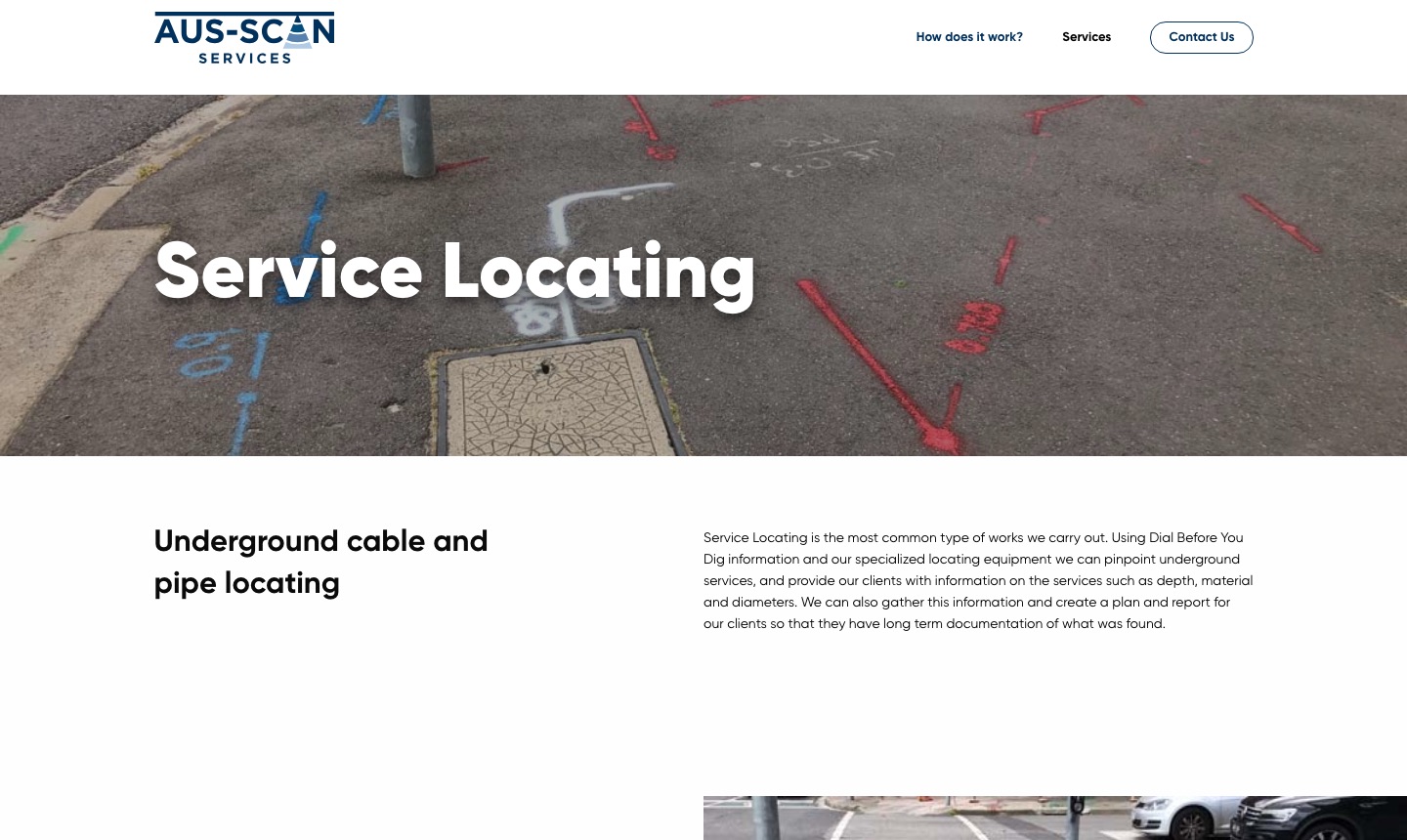
- Service pages with a large photo heading and a single paragraph, and nothing to call or book from.
- Out-of-date wording, including the old “Dial Before You Dig” name, now Before You Dig Australia (BYDA), plus typos.
- Leftover WordPress pages still public: a default “hello world” post, an author archive and a duplicate service URL.
The constraints
Do not lose the rankings. Every existing URL stayed exactly as it was, down to the trailing slash, and old URLs that had moved got permanent redirects. The existing copy was ported and tidied rather than rewritten from nothing, because it was already doing work in search. Search Console figures are exported before launch, so there is a real baseline to compare against.
Nothing made up. No invented jobs, reviews or statistics. Every technical claim on the site is checked by the owner, who is the one who will be held to it on site.
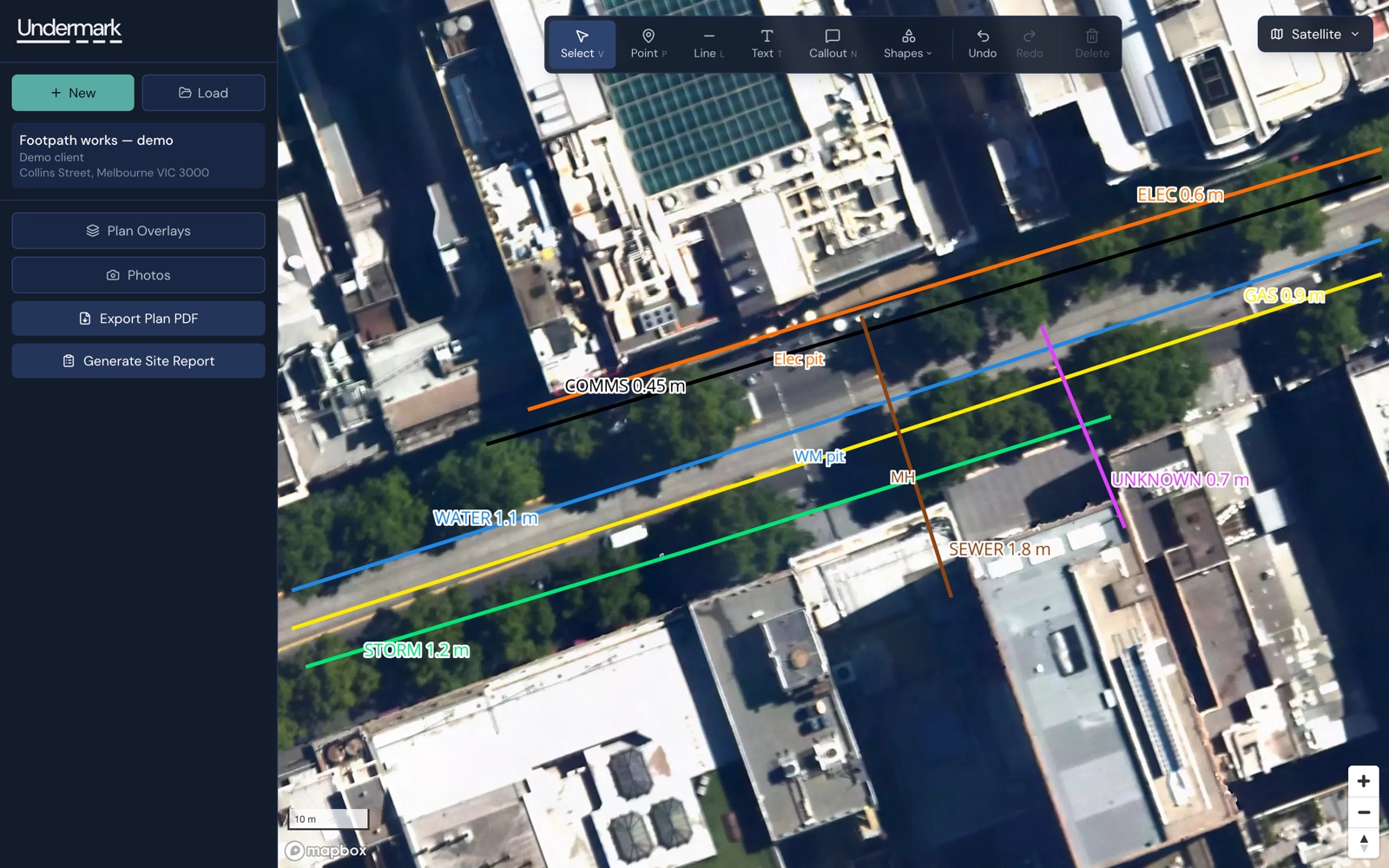
The colours mean something. In locating, colours are a standard (AS 5488): yellow is gas, orange is electricity, blue is water. So none of them could be used as a brand colour. Hi-vis yellow on a plan reads as gas, not as a logo.
What we built
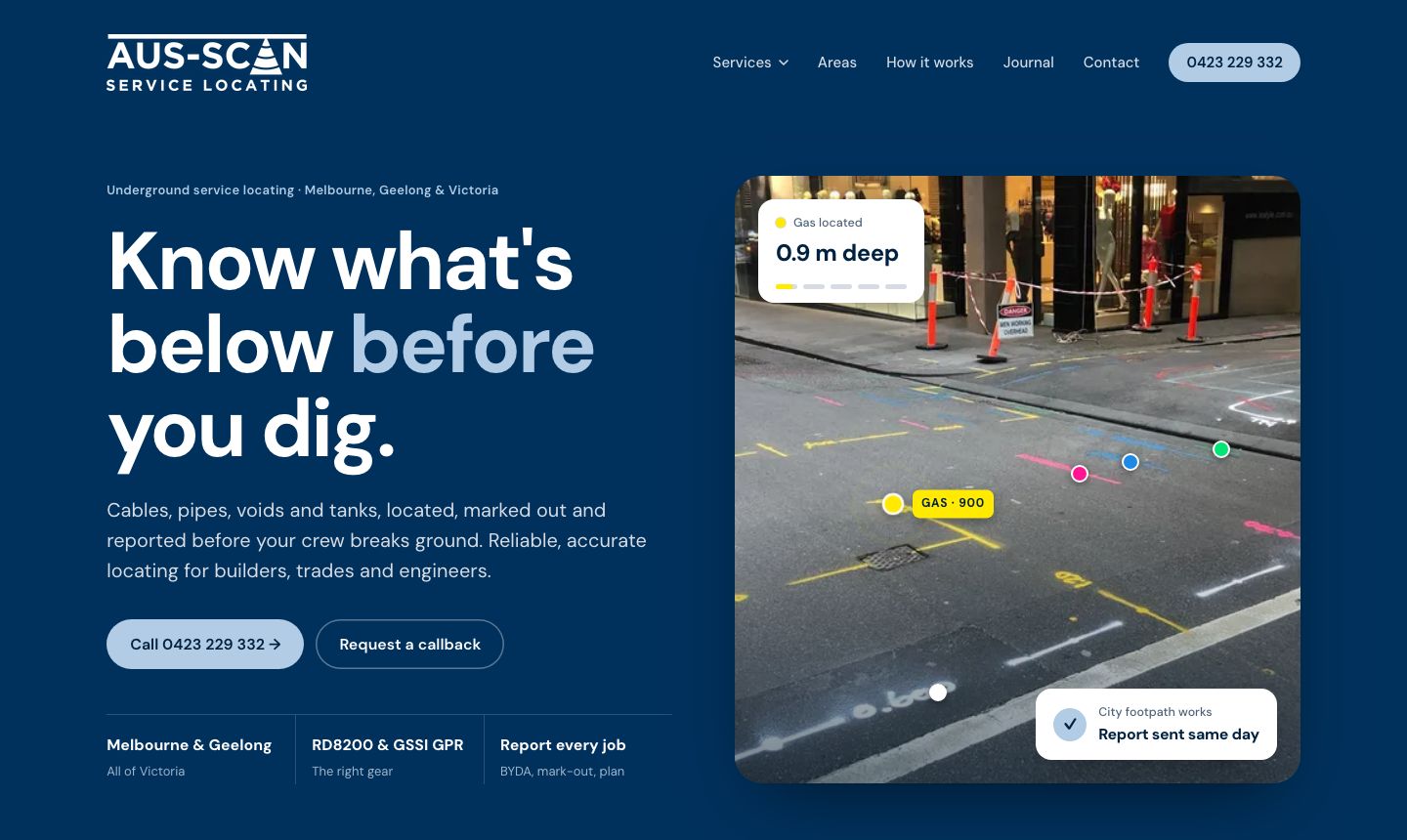
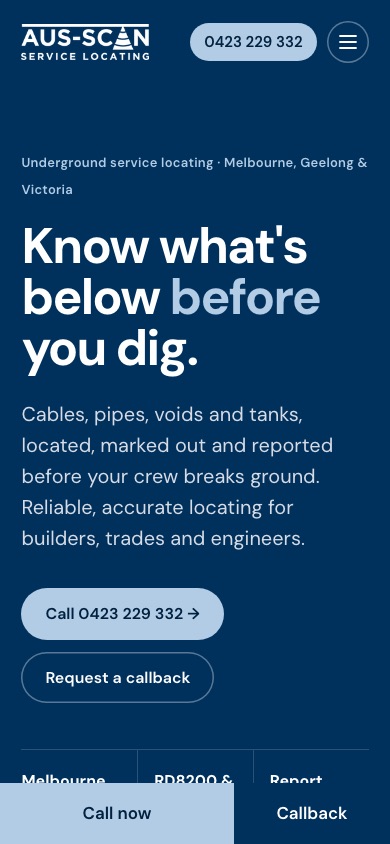
Phone first. The number is in the header, in every page hero and, on mobile, in a fixed bar at the bottom of the screen. The callback form asks only what is needed to call back. If the form ever fails to send, it says so and shows the number, instead of failing silently.
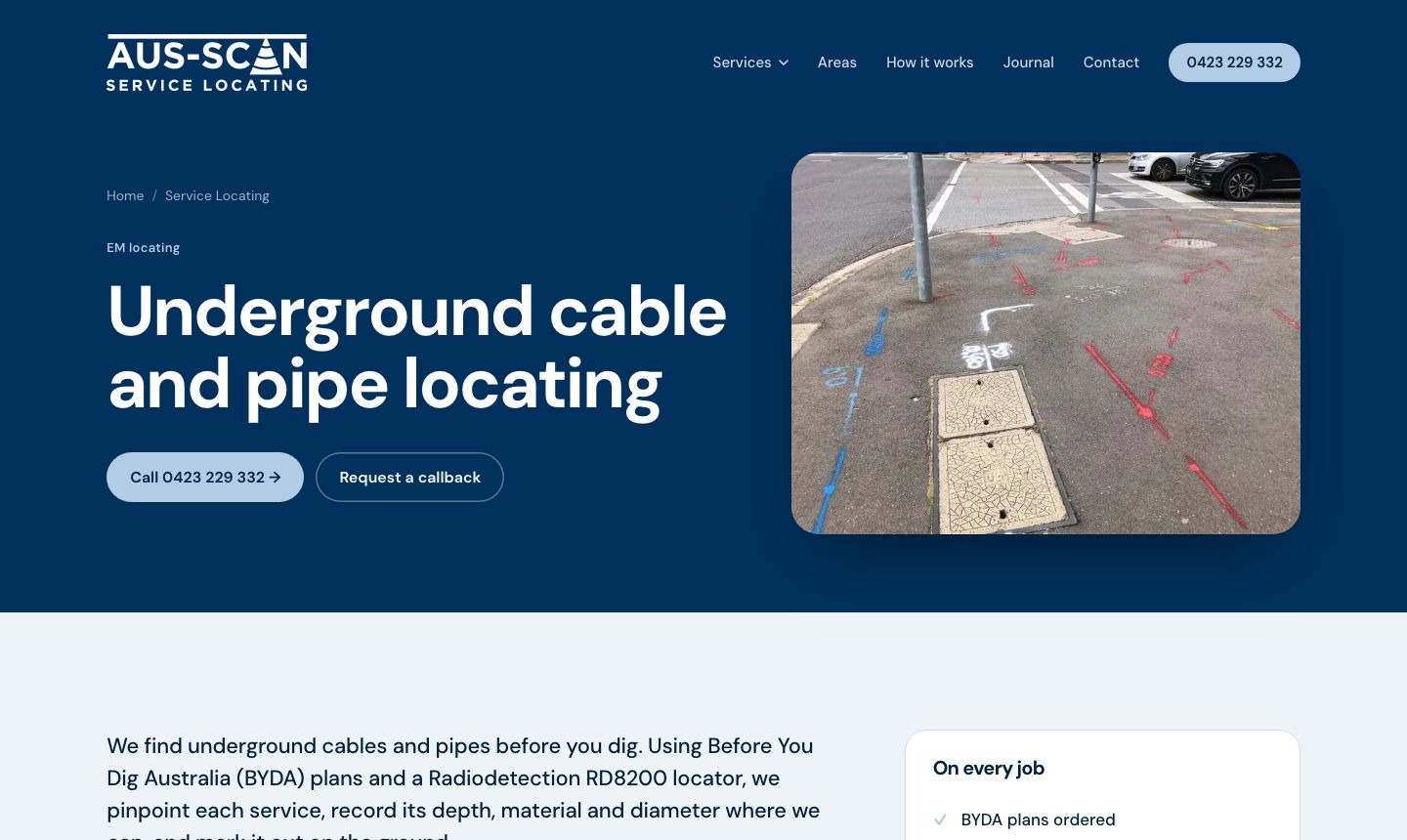
Service pages that answer the question. Each of the six services, from cable and pipe locating to GPR scanning and underground tank detection, now says what is found, with what equipment, and what the customer gets at the end, with the call button next to the headline.
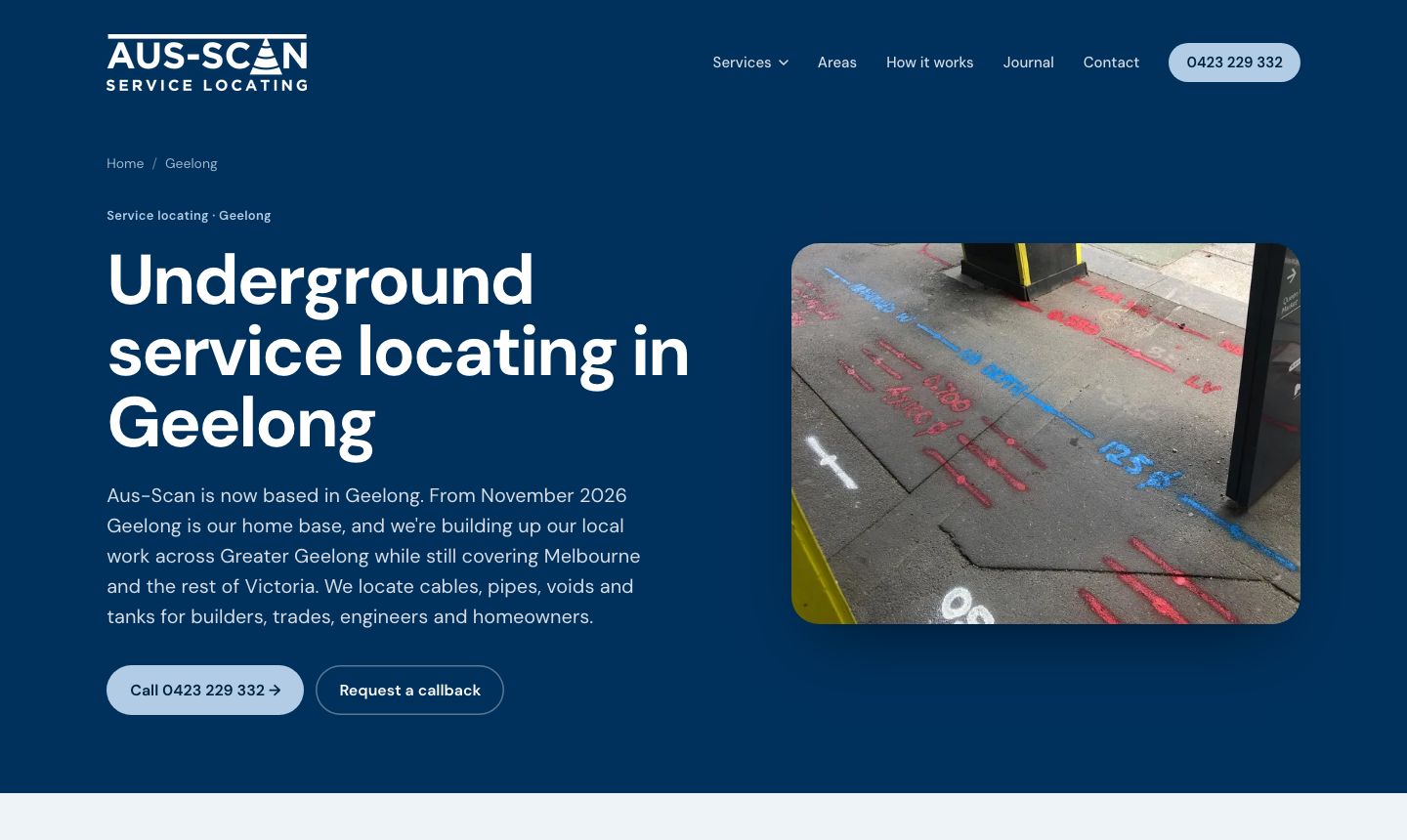
Local pages that are actually local. Area pages for Melbourne, Geelong and the regions around them, written about the work in each area rather than one template with the suburb swapped. More areas get added only when there are real jobs there to write about. There are also pages for specific trades, such as solar installers and pool builders.
A hero that shows the job. The homepage photo of a marked-out street is interactive: points in the standard service colours step through what was found and how deep. It is built from real buttons, works with a keyboard, and stops moving for people who have reduced motion turned on.
Underneath. Structured data for search engines on every page type, a sitemap, and plain-text versions of every page so AI assistants can read and quote the site accurately. Analytics count the two things that matter, call clicks and callback requests, and load only on the live domain. Every build runs automated tests and fails if any internal link is broken.
What we deliberately did not build
- No CMS. Content lives in plain files. That keeps the site fast, simple to host and hard to break.
- No call-tracking numbers. The real number stays everywhere, matching every listing that already shows it.
- No file uploads on the form. It stays short. Anything else can follow once the job is real.
- No page per suburb. Dozens of near-identical suburb pages tend to hurt more than help. Fewer, genuinely local pages instead.
The result
The new site launches in October 2026. What can be checked now: every existing URL is kept or redirected, the phone number is on the first screen of every page, and every build is tested and link-checked before it can go live.
Pending: calls and callback requests compared with the pre-launch Search Console baseline. We will add them here once there are three months of data, not before.