Finance & professional services
Look trustworthy. Handle client details like it.
Clients judge a firm by how it handles their information. If your website asks for sensitive details over plain email, that is the first thing we fix.


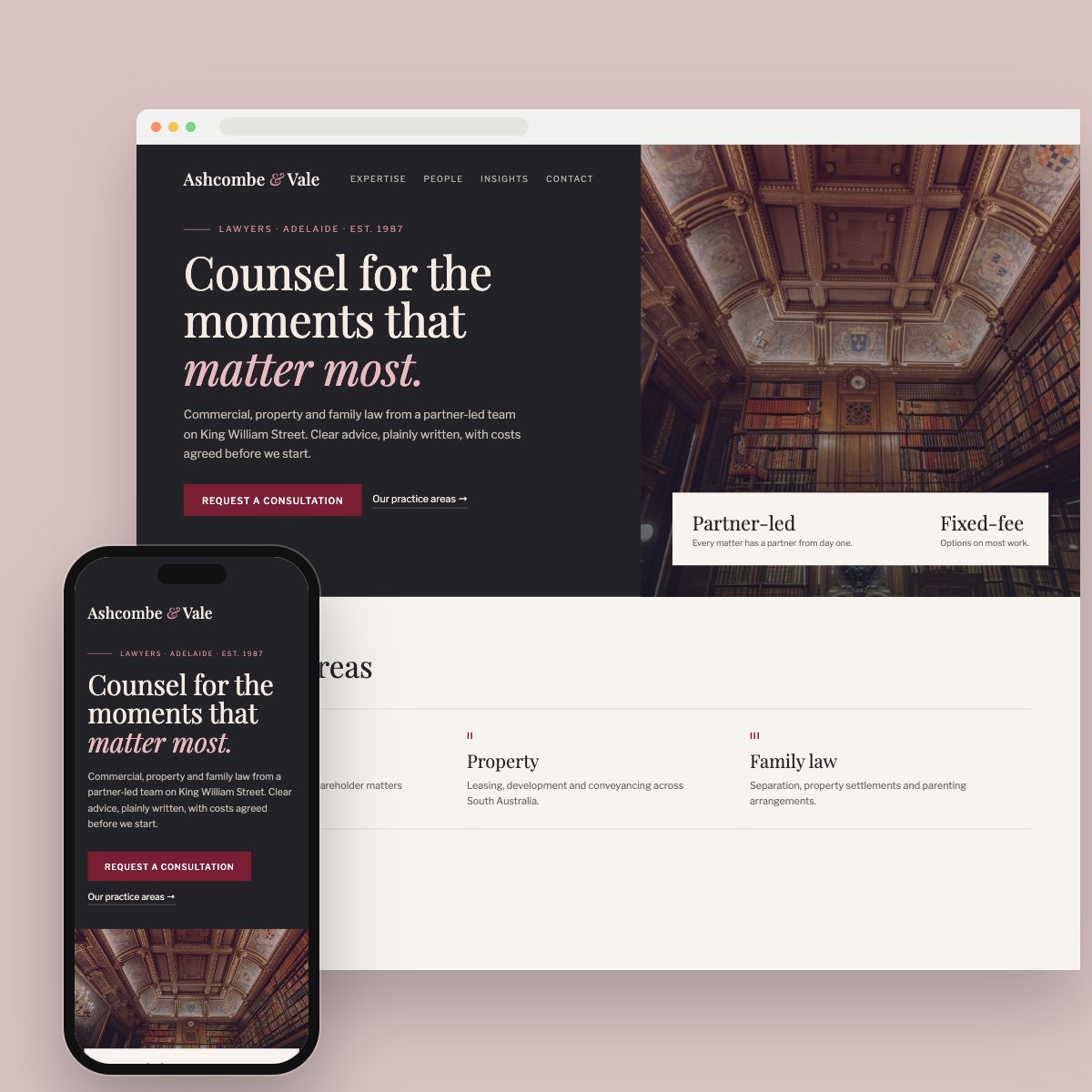

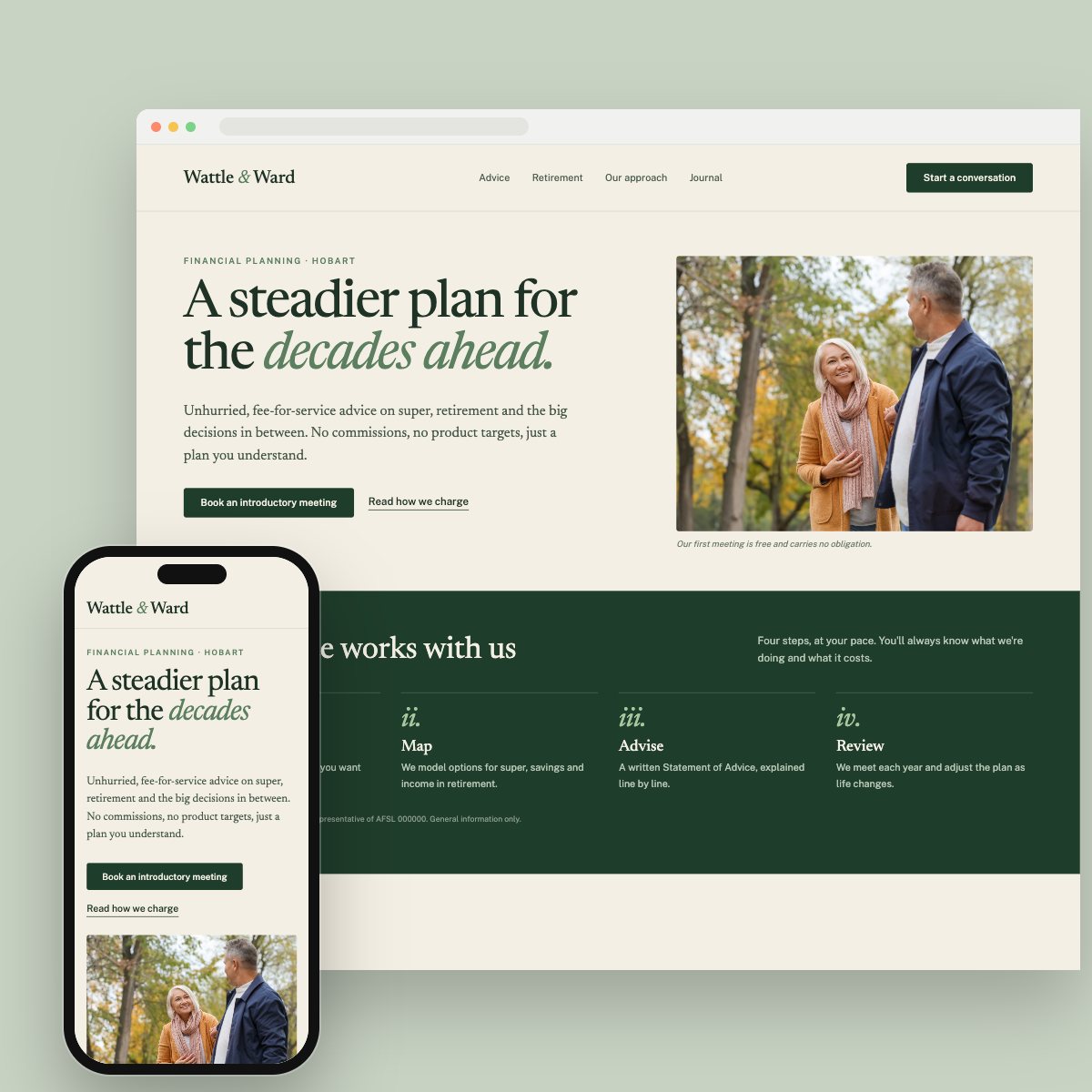
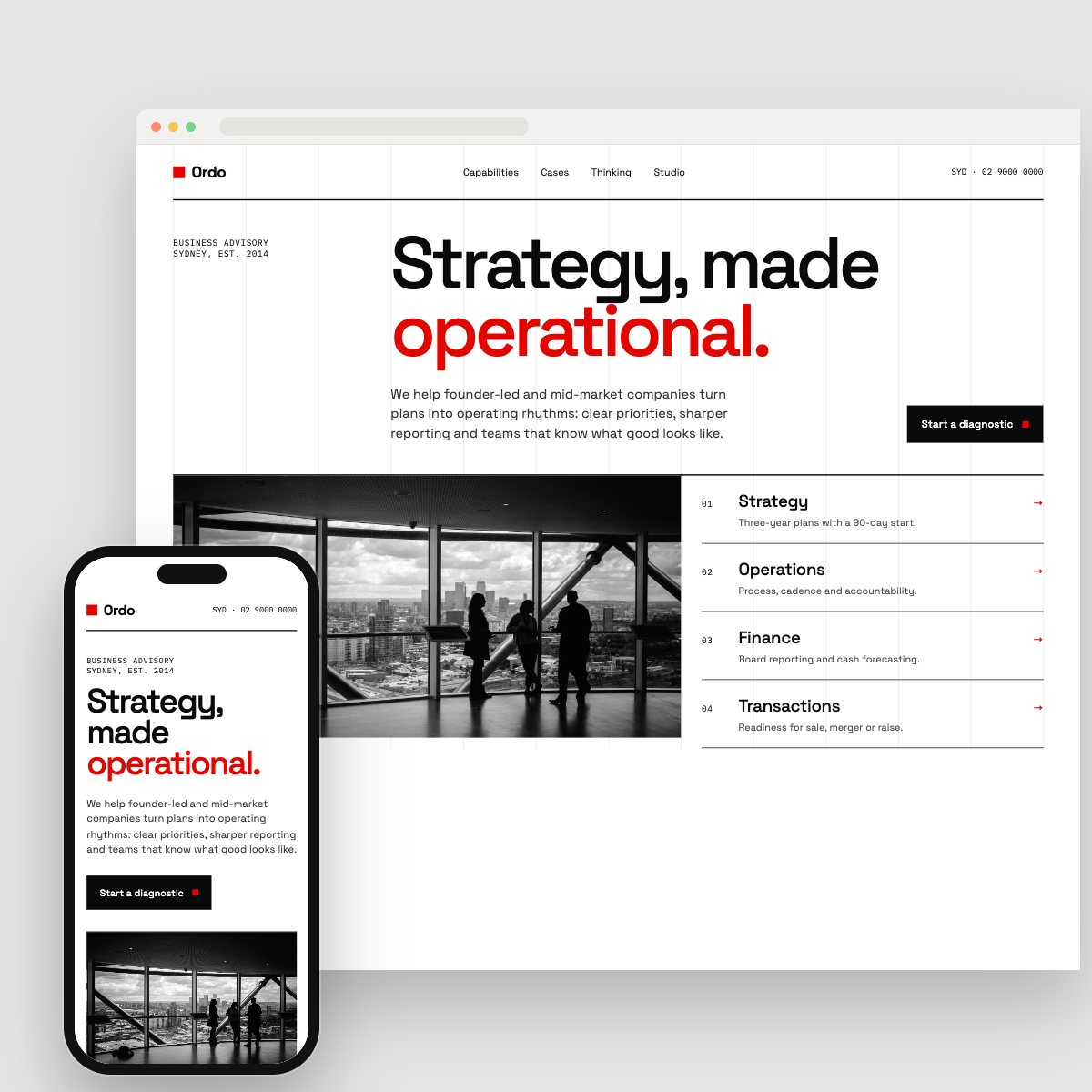
The problem
Many professional services websites still collect tax file numbers, ID documents or financial details through a contact form that emails everything in plain text. Others send clients to a portal through a link buried three pages deep. Neither builds confidence.
The rest of the site often lags behind the firm: out-of-date team pages, service descriptions written years ago, and booking handled by phone tag. We fix the intake and the links into your existing practice software, then tidy the pages clients actually read.
What we watch for
- Sensitive details such as TFNs, ID and financial records are never sent over plain email
- Forms collect only what is needed, with storage and access you control
- Disclaimers and regulatory wording are supplied by you or your advisers, not written by us
- End of financial year and tax time, when booking and upload traffic peaks
- Who in the firm has access to submitted information, and how it is removed
Jobs we do for finance & professional services
Secure intake and document upload
Replace plain-email forms with secure collection and storage you control.
Client portal links and onboarding
Make it easy for new clients to find and use your existing portal.
Online appointment booking
Let clients book consultations directly, synced with your calendar.
Team and service pages
Clear, current pages that are easy for staff to update.
Calculators and tools
Simple, clearly labelled calculators you provide the logic and wording for.
Practice software integrations
Send enquiries into your CRM or practice management tool where it allows.
Related services
Platforms we often see
Reading for finance & professional services
Scoping agent
Tell us what’s stuck.
Two minutes of guided questions. You get a plain-English brief, and a developer replies within one business day.
- Guided questions, not an AI chatbot
- A person reviews every brief
- Never asks for passwords or keys
No account. No sales script. Never asks for passwords or keys.
Finance & professional services / Straight answers
Before you ask.
How much does a website for an accountant, lawyer or broker cost?
A small firm website of up to five pages typically costs $2,500 to $4,000 AUD with us, and a single landing page starts from $900. If you only need fixes to an existing site, defined jobs start from $250. Connecting forms to your practice software usually lands between $600 and $3,500. We quote a fixed price from a written scope, so there are no hourly surprises and no retainer.
How long does it take to update an accounting or law firm website?
Most fixes take 1 to 5 business days, and a small new site takes 2 to 4 weeks, depending on how ready your content is. Integrations usually take 3 to 10 business days once API access is confirmed. For accountants, aim to finish booking and upload changes well before end of financial year and tax time, when client traffic peaks. We schedule changes so nothing goes live in your busiest week.
How should clients send us tax documents and ID through our website?
Through a secure upload or your existing client portal, not email attachments or an ordinary contact form. Many firms already have an option inside tools like FYI, Karbon, Content Snare or their practice software. We link to or embed that where the platform allows, or set up a secure form with storage you control. Tax file numbers and ID are sensitive, so we keep them out of plain email and collect only what you need.
Can you connect our website to Xero Practice Manager, Karbon or FYI?
Often, yes, depending on what each platform allows through its API, forms or integrations. A common job is sending website enquiries or new-client details into your CRM or practice system instead of a shared inbox. We confirm what your specific system supports before quoting, because some only accept data through their own forms or a connector like Zapier. Most integration jobs cost $600 to $3,500 and take 3 to 10 business days.
Can you make our firm’s website compliant?
We build carefully, but whether your website meets your regulatory obligations is for you and your advisers to confirm. Rules can apply to how you advertise, such as the Tax Practitioners Board symbol and registration number, credit or financial services licence details, and legal profession advertising rules in your state. The Privacy Act and Spam Act may also apply. We place disclaimers and licence wording exactly as you supply them. We do not write them.
Will you see our client data?
Only what is needed to build and test, and ideally none. We use test data wherever possible, never ask for passwords, and work through accounts you create and can remove at any time. Your client information stays in your own systems and accounts, not ours. If a job means touching real submissions, we agree beforehand what we can see and you remove our access when the job is finished.
How do accountants and law firms get found on Google locally?
Mostly through an accurate Google Business Profile and clear service pages that match it. We check that your name, address, phone and hours agree across the site and your profiles, add structured data for your firm and each office, and make sure service pages are crawlable and fast. Separate pages for genuinely different services help more than thin suburb pages. Technical SEO audits start from $600. Ongoing SEO campaigns and content writing are outside what we do.
Will ChatGPT or Google AI recommend my accounting or law firm?
Nobody can guarantee that, but you can make your firm easier for AI tools to understand. They draw on what is clearly stated on your website and elsewhere online. We make sure your services, locations, team and fees or engagement terms, where you choose to publish them, are written as plain text, not hidden in PDFs or images. We also add structured data and check that search engines can crawl the site. The rest depends on your reputation.
Does our firm’s website need to be accessible under WCAG?
If people with disability cannot use your website, you may have obligations under the Disability Discrimination Act, and WCAG is the usual standard used to measure it. Whether it applies to you is a question for your advisers. Practically, we test forms, booking and upload flows with a keyboard and screen reader, check contrast and fix what fails. Accessibility audits of key flows start from $750, and most audit-and-fix jobs land between $750 and $4,000.
Should we rebuild our firm’s old website or fix it?
Fix it first if the structure is sound, because most firm websites need secure forms, updated pages and faster loading more than a rebuild. We look at what is actually wrong and tell you if a rebuild is cheaper. We do not write legal or financial content, give compliance advice, run marketing retainers or host client records ourselves. Large portal builds or document management systems are bigger than us, and we will say so.